
Best Cleaning Service in Mumbai & Thane !
Table of Contents
Toggle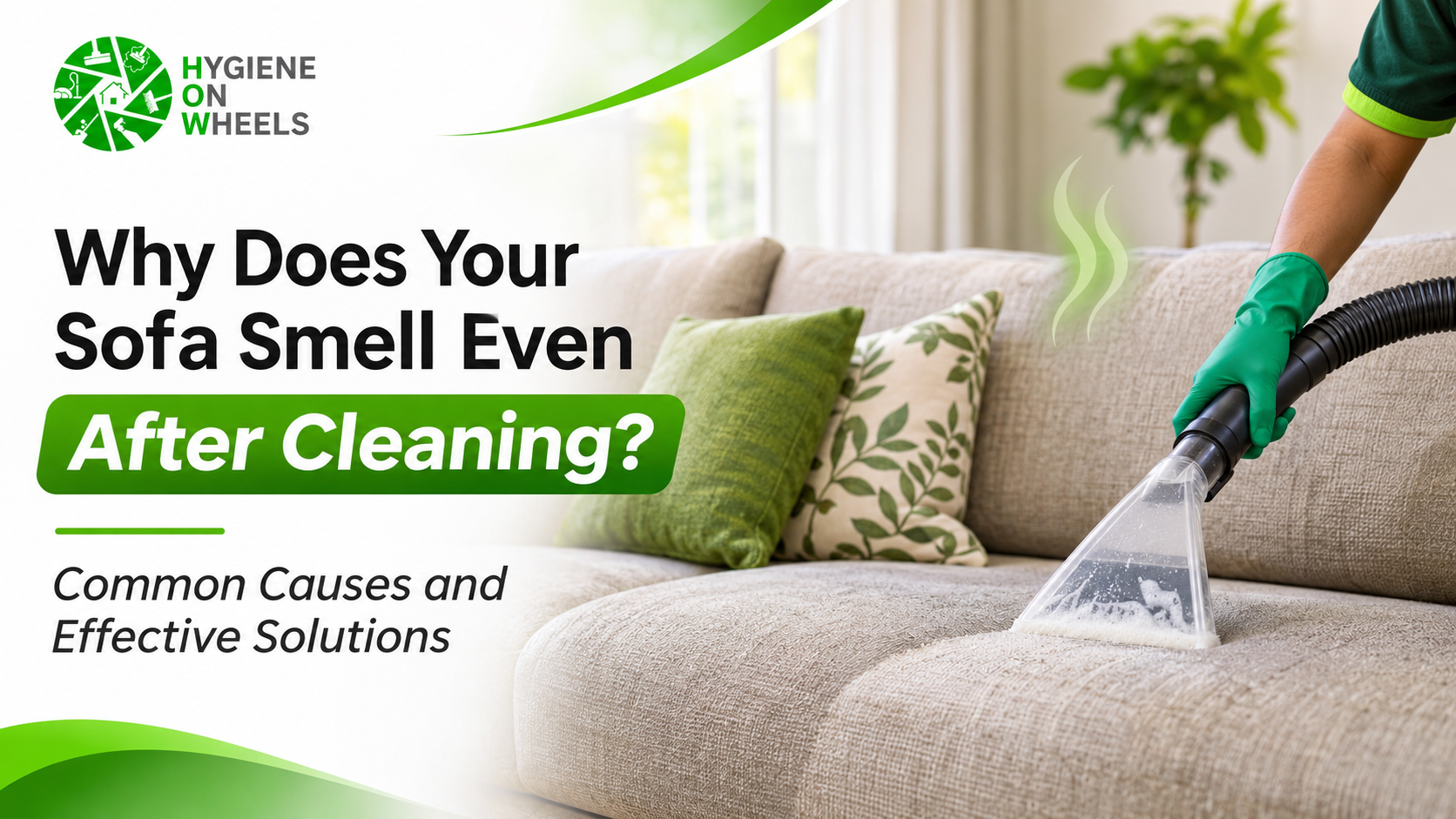
Have you ever cleaned your sofa thoroughly, only to notice an unpleasant smell returning a few days later? This is a common problem in homes where sofas are used daily, especially in humid environments like Thane.
A sofa can look spotless on the outside while still holding moisture, dust, body oils, food particles and odour-causing residue inside its upholstery.
Understanding why these smells return is the first step towards finding a lasting solution.
For stubborn upholstery odours, sofa deep cleaning services in Thane can help address embedded dirt and residue using methods appropriate for the sofa’s fabric and condition.
In this guide, we’ll explore the causes of recurring sofa smells, safe cleaning techniques, prevention tips and signs that professional cleaning may be necessary.
Cleaning a sofa’s surface doesn’t always remove the source of an unpleasant smell. Upholstered furniture contains multiple layers of fabric, padding and cushioning that can retain contaminants.
Here are some common reasons odours return.
Excess moisture is one of the main reasons a sofa may smell unpleasant after cleaning.
When too much water is used during shampooing, moisture can remain trapped inside the cushions or padding.
This can create conditions that encourage microbial growth, particularly in humid weather.
What to do: Allow sufficient drying time, improve ventilation and avoid using the sofa until it is completely dry. Persistent musty smells may require professional assessment.
Sofas absorb sweat, skin oils and everyday residue from regular use.
Over time, these substances can settle into upholstery fibres and contribute to unwanted smells.
Surface wiping may not reach the affected layers.
Accidental spills are common in living rooms.
Tea, coffee, milk, sauces and other food residues can penetrate upholstery and cushioning.
Even when a visible stain disappears, remaining residue may continue to produce unpleasant odours.
Pet hair, dander and accidental urine contamination can contribute to persistent sofa smells.
Urine may reach deeper layers, making ordinary surface cleaning insufficient.
Using excessive detergent or unsuitable cleaning solutions can leave residue on upholstery.
This residue may attract dirt or contribute to unpleasant smells over time.
Dust can accumulate in cushions, seams and areas underneath furniture.
When combined with humidity and poor airflow, it may contribute to stale or musty odours.
Identifying the smell can help you understand its possible source.
| Type of smell | Possible cause |
|---|---|
| Musty or damp | Trapped moisture or possible microbial growth |
| Sour | Food, drink or body-oil residue |
| Pet-related | Dander, accidents or contaminated padding |
| Chemical | Residual cleaning products |
| Stale | Accumulated dust, oils and poor ventilation |
A smell alone cannot confirm the exact cause. Persistent damp or mould-like odours should be investigated rather than repeatedly covered with fragrances.
Different upholstery materials require different cleaning methods. Before applying any product, check the sofa’s care label and test the recommended cleaner on an inconspicuous area.
Use a vacuum cleaner with a suitable upholstery attachment.
Focus on the seat cushions, backrests, armrests, seams and crevices where dust and crumbs accumulate.
Inspect the sofa for visible stains, damp patches, pet accidents or unusual discolouration.
Pay special attention to the areas underneath removable cushions.
Choose a cleaning product compatible with the sofa’s upholstery.
Avoid soaking the fabric or applying excessive detergent.
Some fabrics require solvent-based or professional-only cleaning methods.
Follow the product instructions for removing cleaning solution.
Excess detergent left behind can attract additional dirt.
Improve airflow with fans or ventilation where appropriate.
Avoid sitting on damp cushions or covering them before they have dried.
If moisture has penetrated deep into the padding, professional assistance may be necessary.
When household cleaning methods fail, the source of the smell may be deeper than the visible fabric.
Professional sofa cleaning services in Thane can help assess upholstery conditions and select suitable cleaning techniques.
Depending on the material and service scope, professional cleaning may include:
Upholstery inspection
Detailed vacuuming
Fabric-compatible stain treatment
Controlled cleaning-solution application
Extraction of loosened dirt and residue
Guidance on drying and maintenance
However, cleaning cannot guarantee complete odour removal, especially when contamination has reached internal padding or structural materials.
Yes. Humidity can make upholstery drying more difficult.
During Thane’s monsoon season, moisture may remain in thick cushions for longer, especially in rooms with limited ventilation.
This can increase the likelihood of musty smells after wet cleaning.
To reduce moisture-related problems, avoid excessive water use, improve airflow, address indoor dampness and ensure the sofa dries fully.
If your sofa has persistent damp patches or visible mould, avoid attempting aggressive DIY treatment. Seek professional advice about whether cleaning or replacement is appropriate.
Sofas are not the only upholstered surfaces that collect dust, moisture and everyday residue.
Fabric chairs absorb body oils, sweat and accidental spills, particularly when used frequently.
Professional chair cleaning services in Thane can help maintain upholstered seating in dining rooms, home offices and living spaces.
Mattresses can accumulate perspiration, dust and moisture over time.
If a bedroom has a persistent stale smell, inspect the mattress and bedding separately rather than assuming the sofa is responsible.
Hygiene On Wheels also offers mattress cleaning services in Thane, which may be relevant when multiple upholstered items require attention.
Carpets and rugs can retain food spills, pet residue and moisture.
Cleaning the sofa alone may not resolve a room-wide odour if nearby textiles are also affected.
In compact apartments and open-plan homes, cooking fumes can travel from the kitchen into the living area.
Airborne oil particles and cooking residue may settle on nearby furniture, including upholstered sofas.
Maintaining a clean cooking environment can help reduce grease accumulation around the home.
Professional kitchen deep cleaning services in Thane can address grease and residue on suitable kitchen surfaces.
Combining regular kitchen maintenance with upholstery care is especially useful in homes where the kitchen and living room share an open space.
There is no universal cleaning schedule for every sofa.
The appropriate frequency depends on upholstery material, household activity, pets, spills and manufacturer recommendations.
| Cleaning activity | Suggested frequency |
|---|---|
| Light surface vacuuming | Weekly |
| Crevice and cushion vacuuming | Every 1–2 weeks |
| Spill treatment | As soon as practical |
| Upholstery inspection | Monthly |
| Professional cleaning assessment | When buildup, stains or odours persist |
Homes with pets, children or heavy daily sofa usage may require more frequent attention.
Remove loose dust, crumbs and pet hair before they accumulate inside seams and cushions.
Blot spills using a clean cloth and follow the upholstery manufacturer’s care instructions.
Avoid rubbing stains aggressively.
Maintain airflow and control excessive indoor humidity where possible.
Overwetting upholstery can create drying problems, particularly in humid weather.
Regularly clean washable pet bedding and blankets to reduce the transfer of odours to furniture.
Fragrances may temporarily mask odours without removing their source.
Dust, food residue, dirty floors and neglected textiles can all contribute to a room feeling stale.
For broader household maintenance, residential cleaning services in Thane can help address cleaning needs beyond upholstered furniture.
Consider professional assistance when:
Unpleasant odours return shortly after cleaning.
The sofa has stubborn food or drink stains.
Pet accidents have affected the upholstery.
Dust and dirt have accumulated over an extended period.
Previous cleaning has left the sofa excessively damp.
You are unsure which cleaning method suits the fabric.
Multiple upholstered items need detailed attention.
If you notice extensive mould, persistent internal moisture or significant contamination, ask a qualified specialist whether the furniture can be safely restored.
Hygiene On Wheels provides professional cleaning services for residential and commercial properties across Thane and surrounding service areas.
Our services cover multiple cleaning requirements, including sofa cleaning, upholstered chair cleaning, mattress cleaning, kitchen deep cleaning and residential cleaning.
With trained cleaning teams, professional equipment and cleaning methods selected according to surface requirements, we aim to help customers maintain cleaner and more comfortable spaces.
Whether your sofa needs detailed cleaning or your entire home requires attention, our team can discuss your requirements and recommend a suitable service.
A sofa that smells bad after cleaning may have trapped moisture, accumulated body oils, food residue, pet contamination or detergent remaining in its upholstery.
The best solution depends on identifying the cause rather than simply covering the smell with fragrance.
Regular vacuuming, quick spill treatment, appropriate cleaning products and complete drying can help prevent many common odour problems.
For persistent smells or difficult upholstery conditions, professional assessment and cleaning may be worthwhile
Contact Hygiene On Wheels to discuss your upholstery cleaning requirements and arrange a suitable cleaning service in Thane.
Excess moisture, incomplete drying or remaining cleaning residue can cause unpleasant smells after shampooing. If the smell persists, the sofa may need professional assessment to identify trapped moisture or contamination.
Professional cleaning can help remove many sources of upholstery odours, including dirt and certain residues. However, complete removal is not guaranteed when smells originate from heavily contaminated padding, mould or damaged internal materials.
Maintain good ventilation, avoid overwetting upholstery, vacuum regularly and allow the sofa to dry completely after cleaning. Address any indoor dampness promptly and seek professional advice for persistent musty odours.





At HOW, we are always looking for ways to improve the quality of life in both our personal lives and in the neighbourhoods we live in. We look for ways to make the little things a bit easier giving us all a little more time to enjoy the things we love.
Hygiene On Wheels, Flat No - 201, Shrushti Owners Court, Next Varad Hospital, Uthalsar Naka, Thane West, Maharashtra 400601
© 2026 Hygiene On Wheels | Designed & Developed by DreamsNama – Terms and Conditions