
Best Cleaning Service in Mumbai & Thane !
Table of Contents
Toggle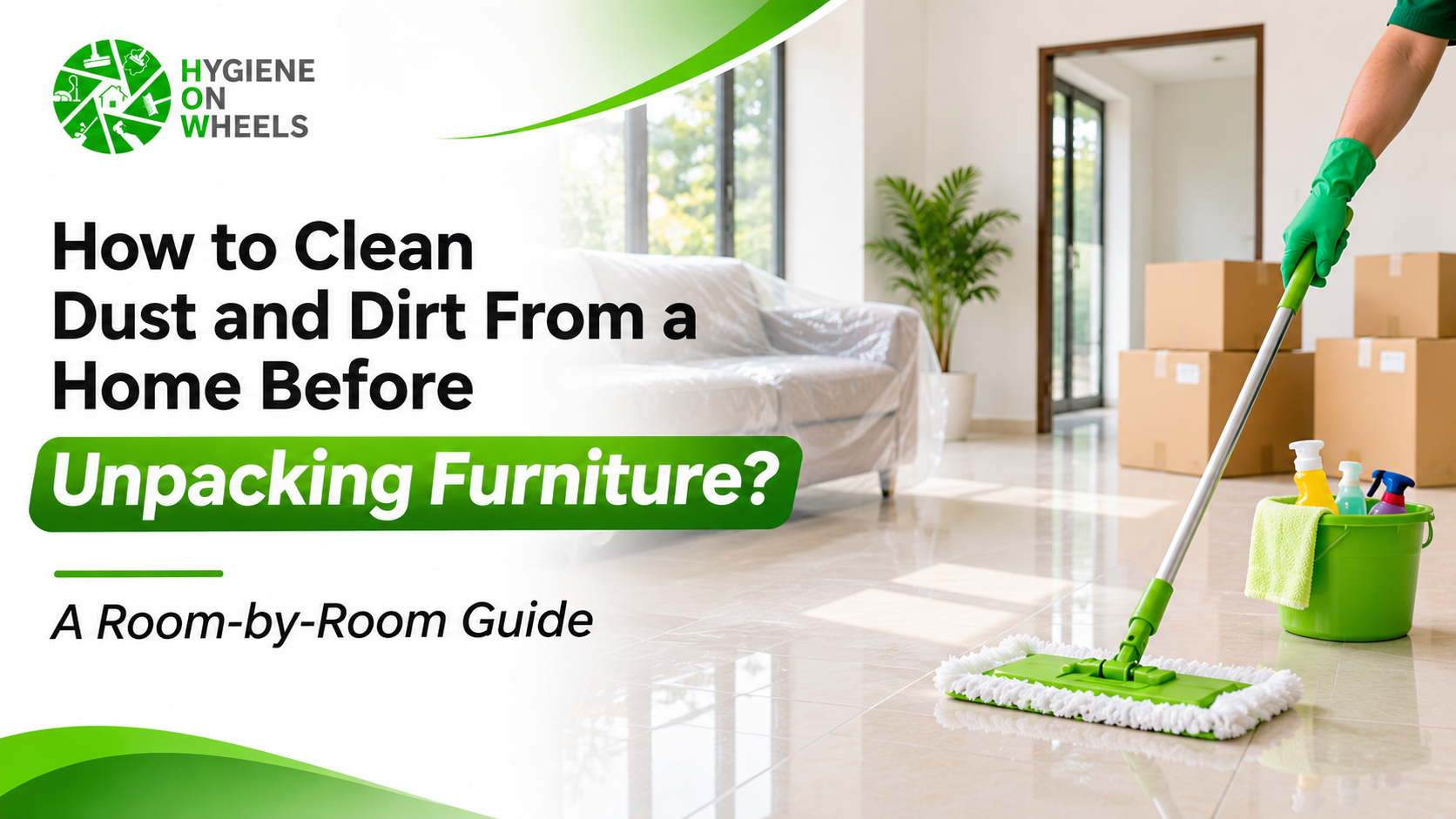
Moving into a new home is exciting, but unpacking furniture and arranging belongings before cleaning can make the process more difficult. Even an empty apartment may contain dust, construction residue, stains, cobwebs and hidden dirt left behind by previous occupants.
Cleaning your home before unpacking furniture allows you to reach corners, walls, floors and storage spaces that may become difficult to access later.
Whether you’re shifting into a newly constructed apartment or a previously occupied flat, following a room-by-room cleaning plan can help create a cleaner and more comfortable living environment.
For homeowners who prefer professional assistance, home cleaning services in Thane can help address accumulated dust, dirt and stains before furniture is arranged.
In this guide, we’ll explain which areas to clean first, how to remove dust safely and what to check before unpacking your belongings.
Cleaning an empty home is generally easier than cleaning a fully furnished one.
Once sofas, beds, wardrobes and appliances are installed, several areas become harder to access.
Empty rooms allow you to clean behind doors, along skirting boards and around electrical fittings without moving heavy furniture.
Dust may accumulate on walls, window frames, shelves and floors while a property remains vacant.
Removing this dust before unpacking helps prevent it from settling on your belongings.
Kitchen cabinets, wardrobes and drawers should be inspected and cleaned before storing utensils, clothing and personal items.
Completing detailed cleaning before furniture installation can reduce the need to rearrange heavy items afterwards.
A clean environment makes unpacking and organising belongings more convenient.
Before beginning, walk through every room and identify areas requiring attention.
Check for:
Dust on walls and ceilings
Cobwebs around corners
Stains on floors and tiles
Grease inside kitchen cabinets
Dirt around windows
Bathroom scale and soap residue
Debris behind doors
Moisture or mould-like patches
Create a simple cleaning checklist based on the property’s condition.
If you notice significant dampness, active leaks or extensive mould, address the underlying problem before proceeding with routine cleaning.
Dusting should generally begin with higher surfaces and progress downward.
This prevents loosened dust from settling onto areas that have already been cleaned.
Use a suitable extendable duster to remove cobwebs and loose dust from accessible ceiling corners.
Avoid standing on unstable furniture to reach elevated areas.
Switch off electrical fixtures before cleaning.
Use suitable tools to remove dust from accessible fan blades and light covers, following the manufacturer’s instructions.
For washable painted surfaces, use a lightly dampened microfiber cloth where appropriate.
Avoid excessive water, particularly around electrical outlets and delicate finishes.
Skirting boards often collect dust that becomes difficult to reach once furniture is placed against the walls.
Include them in your initial cleaning routine.
The kitchen should be cleaned before utensils, groceries and appliances are unpacked.
Even when the room looks tidy, grease, dust and food residue may remain inside cabinets and around cooking surfaces.
Open each cabinet and inspect the shelves, corners and hinges.
Remove loose dust before wiping compatible surfaces with an appropriate cleaning solution.
Allow cabinets to dry before storing food containers and utensils.
Kitchen countertops and wall tiles may contain grease stains, adhesive residue or accumulated dirt.
Use products suitable for the surface material.
Clean the sink, taps and accessible surrounding surfaces.
Check for leaks or signs of moisture inside the cabinet below the sink.
If the property has a previously used cooking hood, inspect its accessible surfaces and filters.
Avoid dismantling electrical components or internal ventilation equipment.
When grease and stubborn stains are widespread, professional kitchen deep cleaning services in Thane may help prepare the cooking area before regular use.
Windows are often overlooked during the moving process.
Dust can accumulate in window tracks, around sliding mechanisms and along frame edges.
Use a soft brush or vacuum attachment to remove loose particles from accessible tracks.
Clean frames using products compatible with aluminium, uPVC, wood or other frame materials.
Use a suitable glass cleaner and microfiber cloth to remove fingerprints and surface marks.
Inspect sliding tracks for dirt, debris and drainage blockages.
Avoid forcing window components or using sharp tools that may damage the mechanisms.
Professional window cleaning services in Thane can help with detailed cleaning of accessible windows and frames.
For high-rise apartments, exterior glass cleaning should be handled by appropriately equipped professionals.
Bathrooms should receive careful attention before household members begin using them.
Previously occupied bathrooms may contain soap residue, mineral deposits, dust and dirt around fittings.
Use a toilet cleaner suitable for the fixture and follow the product’s recommended contact time.
Clean wall and floor tiles with products appropriate for their finish.
Avoid harsh acidic cleaners on sensitive natural stone.
Inspect taps, showerheads and other fittings for mineral deposits.
Use compatible descaling products where recommended.
Remove visible soap residue and inspect corners, seals and drainage areas.
Ensure the exhaust fan or ventilation system is functioning correctly.
For stubborn deposits and neglected bathroom surfaces, bathroom deep cleaning services in Thane can help with detailed cleaning.
Never mix bleach with acidic or ammonia-based cleaning products.
The living room is usually one of the first areas where furniture is arranged.
However, placing a sofa against an unclean wall or dusty floor can make subsequent cleaning inconvenient.
Before positioning furniture:
Remove cobwebs and loose wall dust.
Clean skirting boards and floor corners.
Wipe accessible switches and door handles safely.
Vacuum or mop the floor according to its material.
Allow all cleaned surfaces to dry.
Inspect the condition of incoming upholstered furniture.
If you’re bringing a sofa from your previous home, inspect it for dust, stains, pet hair and unpleasant odours.
Transport and storage can also expose upholstery to additional dirt.
Professional sofa cleaning services in Thane can help refresh suitable upholstered furniture before it becomes part of your newly arranged living space.
Always allow cleaned upholstery to dry completely before use.
Bedrooms are easier to clean when they are empty.
Start by removing dust from wall corners, window frames and accessible fixtures.
Next, clean floors and skirting boards, paying particular attention to areas where beds and wardrobes will be placed.
If built-in wardrobes are already installed, inspect their interiors before storing clothes.
Wipe suitable shelves and allow them to dry.
Also check for damp patches, pest activity and unusual odours that may require attention.
Avoid placing furniture against persistently damp walls until the moisture problem has been resolved.
Dining chairs, office chairs and other fabric-covered furniture may carry dust from storage or transport.
Inspect upholstered seating for visible stains and accumulated dirt before arranging it.
If fabric chairs require more than routine vacuuming, professional chair cleaning services in Thane can help address suitable upholstery surfaces.
This is especially useful when moving existing furniture into a freshly cleaned property.
Floors should receive their final cleaning after most overhead dusting and surface cleaning is complete.
The appropriate method depends on the flooring material.
| Floor type | Recommended approach |
|---|---|
| Ceramic tiles | Vacuum or sweep, then mop with a compatible cleaner |
| Marble | Use a pH-neutral product suitable for natural stone |
| Wooden flooring | Follow the manufacturer’s moisture and cleaning recommendations |
| Vitrified tiles | Remove loose dust and clean with a suitable floor solution |
| Laminate | Use minimal moisture and a manufacturer-approved cleaner |
Pay attention to corners, thresholds and areas behind doors.
Allow floors to dry before moving furniture into place.
Before unpacking, inspect each room to confirm that the main cleaning tasks have been completed.
Ceiling corners and cobwebs cleaned
Fans and accessible light fixtures dusted
Walls and skirting boards inspected
Kitchen cabinets wiped and dried
Kitchen countertops cleaned
Sink and fittings cleaned
Windows and accessible tracks cleaned
Bathroom fixtures and tiles cleaned
Wardrobes and storage shelves cleaned
Floors vacuumed and mopped
Incoming sofas and chairs inspected
All cleaned areas allowed to dry
Once these tasks are completed, you can begin arranging furniture and unpacking your belongings.
If you mop before dusting fans, walls and cabinets, falling dust may make the floor dirty again.
Too much water can damage wooden surfaces, laminate flooring and sensitive materials.
Cabinets may appear clean from the outside while still containing dust or residue inside.
Combining incompatible products can release hazardous fumes or damage surfaces.
Placing belongings inside damp cabinets or against wet walls can create moisture-related problems.
A freshly cleaned home can quickly accumulate dust if incoming furniture is dirty.
Professional cleaning may be useful when a property has accumulated significant dust, stubborn stains or extensive dirt.
You may also consider professional assistance when:
The apartment has remained vacant for a long period.
Renovation or repair work has recently been completed.
Kitchen cabinets contain heavy grease buildup.
Bathroom tiles require intensive cleaning.
Multiple rooms need attention before a moving deadline.
You have limited time to prepare the property.
Upholstered furniture also needs cleaning.
The exact cleaning requirements depend on the condition, size and materials of the property.
Hygiene On Wheels provides cleaning solutions for homeowners and businesses across Thane and surrounding service areas.
The brand offers services covering residential cleaning, sofa cleaning, kitchen deep cleaning, bathroom cleaning, window cleaning and upholstered chair cleaning.
Instead of focusing only on visible floor dust, a detailed cleaning plan considers the different surfaces and cleaning requirements throughout the property.
Whether you’re moving into a newly constructed flat or preparing a previously occupied home, Hygiene On Wheels can help you discuss the cleaning tasks required before unpacking.
Contact the team to confirm service availability, cleaning scope and scheduling.
Cleaning your home before unpacking furniture can make the moving process easier and help prevent hidden dust and dirt from being trapped behind heavy items.
Start with ceilings and walls, continue with kitchen cabinets, windows and bathrooms, and finish with floors.
Inspect sofas, chairs and other upholstered furniture before arranging them inside the newly cleaned property.
By following a practical room-by-room plan, you can prepare a cleaner, more comfortable living space before settling in.
Contact Hygiene On Wheels to discuss your home cleaning requirements and explore suitable cleaning services before unpacking your furniture.
It is generally easier to complete detailed cleaning before moving heavy furniture into place. This allows better access to floors, corners, walls and storage spaces. A light final cleaning may still be needed after moving.
Start with higher surfaces such as ceiling corners, fans and walls. Then clean cabinets, windows, bathrooms and other fixtures. Complete the final floor cleaning after the main dusting tasks.
Professional cleaning is not always necessary, but it can be useful when the property has stubborn stains, accumulated dust, heavy kitchen grease or limited time available for preparation. The decision depends on the home’s condition and your cleaning requirements.





At HOW, we are always looking for ways to improve the quality of life in both our personal lives and in the neighbourhoods we live in. We look for ways to make the little things a bit easier giving us all a little more time to enjoy the things we love.
Hygiene On Wheels, Flat No - 201, Shrushti Owners Court, Next Varad Hospital, Uthalsar Naka, Thane West, Maharashtra 400601
© 2026 Hygiene On Wheels | Designed & Developed by DreamsNama – Terms and Conditions