Best Cleaning Service in Mumbai & Thane !
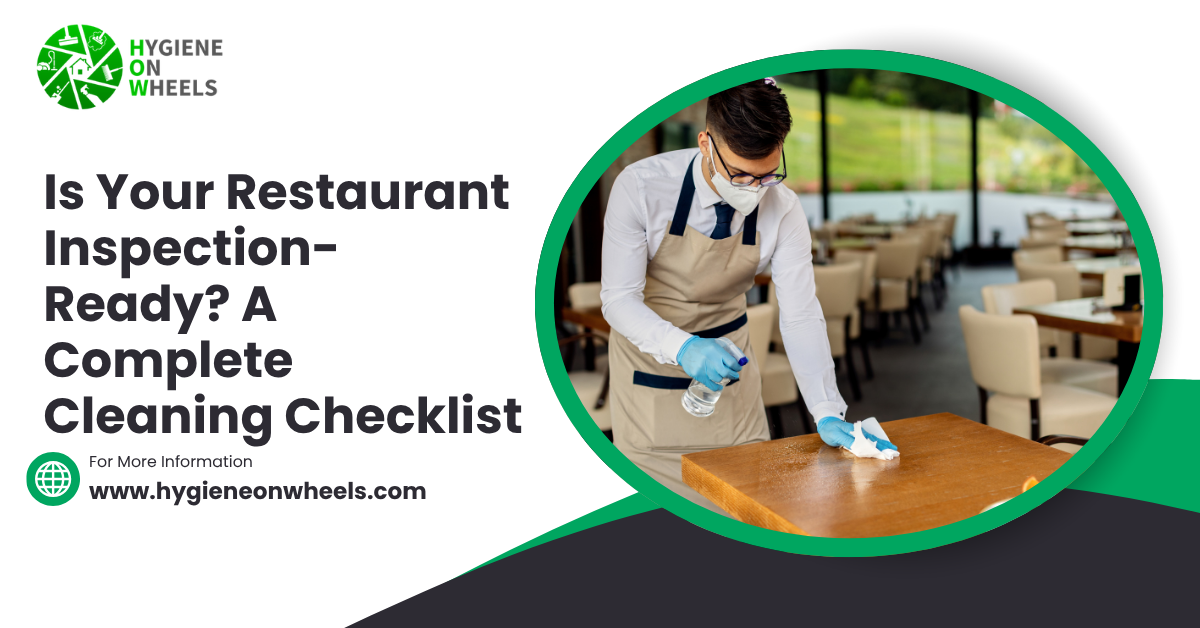
Imagine that your restaurant is in the middle of a busy lunch service. Customers are seated, orders are moving through the kitchen, and your team is focused on keeping everything running smoothly. Then you receive a notice that an inspection is coming up.
At first, everything seemed fine. But as you walk through the restaurant with a closer eye, you start noticing things that are easy to miss during a normal working day – grease around cooking equipment, dust behind appliances, marks on walls, buildup around floor edges, and storage areas that haven’t received detailed attention recently.
This is why preparing for an inspection should not begin only when an inspection date is announced. A consistent cleaning routine can help restaurant owners identify areas that need attention before they become bigger maintenance concerns.
Whether you manage a busy restaurant, café, cloud kitchen, or another food-service establishment, understanding what needs to be cleaned and how often it should be reviewed can make ongoing maintenance much easier.
Professional restaurant cleaning services can also provide additional support when routine cleaning is not enough to address accumulated grease, dirt, residue, and hard-to-reach areas.
Once you start looking at your restaurant from an inspection perspective, you may notice that everyday cleaning and detailed cleaning are not quite the same. Staff may regularly wipe counters, clean tables, sweep floors, and address spills, but some less-visible areas can still be overlooked.
A pre-inspection review gives you an opportunity to walk through the premises systematically and identify areas that require additional attention.
Ask yourself:
Once these basic questions have been reviewed, the next step is to look at each area of the restaurant individually.
A restaurant contains several different working and customer-facing areas, and each requires its own cleaning approach. Starting with the kitchen is practical because it is usually one of the busiest parts of the premises.
Food preparation areas experience frequent use throughout the day. Ingredients, food particles, spills, and cooking residue can accumulate on counters, sinks, backsplashes, shelves, and surrounding surfaces.
Include the following in your cleaning review:
Once these surfaces have been reviewed, it is equally important to consider the equipment responsible for much of the grease and residue found in commercial kitchens.
Stovetops, grills, ovens, fryers, and surrounding surfaces can accumulate grease through regular use. These areas should be included in the restaurant’s routine cleaning schedule and addressed according to the manufacturer’s cleaning recommendations.
Look closely at areas around the equipment rather than focusing only on the visible cooking surfaces. Grease and residue may also collect on nearby walls, splash zones, handles, and floor areas.
What should restaurants check first before an inspection?
Start with high-use areas such as the kitchen, food preparation surfaces, cooking equipment, floors, storage areas, washrooms, and customer-facing spaces.
After the kitchen has been reviewed, move beyond the cooking area and examine the surfaces that customers and employees interact with throughout the day.
Restaurant floors deal with food spills, oil, dirt, and heavy foot traffic every day. Walls near cooking stations can also collect grease and residue, while dust may accumulate around ceiling fixtures.
During your cleaning review, check:
These areas can easily be missed when cleaning is focused only on visible surfaces.
Once the general surfaces are addressed, the same level of attention should be given to areas where food, ingredients, and supplies are stored.
Storage spaces are an important part of restaurant maintenance but may receive less attention than cooking and dining areas.
Check shelves, cabinets, refrigerators, and other storage spaces for:
Keep stored items organised and clean accessible surfaces according to the requirements of the area and equipment.
Another common question:
How often should restaurant storage areas be cleaned?
Storage areas should be checked regularly as part of routine maintenance, with deeper cleaning scheduled according to usage, buildup, and the condition of the space.
After checking storage areas, continue the walkthrough into the customer-facing part of the restaurant, where cleanliness contributes to the overall presentation of the premises.
The dining area is one of the first spaces customers see. Tables, chairs, floors, windows, counters, and other visible surfaces should therefore be included in your regular cleaning routine.
Your checklist can include:
Regular attention to these areas can help maintain a more organised and welcoming dining environment.
However, the customer-facing areas are not the only spaces that need attention. Washrooms should also form an important part of your inspection-preparation checklist.
Washrooms and handwashing areas are frequently used throughout the day and require regular maintenance.
Include:
Also make sure your regular maintenance process accounts for necessary supplies and the specific requirements of the facility.
Once these areas have been reviewed, there is one more part of the restaurant that can require particular attention because of ongoing cooking activity.
Cooking produces grease and airborne particles that can accumulate around exhaust hoods and nearby surfaces. These areas should form part of the restaurant’s regular maintenance schedule.
Depending on the equipment and surface, different cleaning methods may be appropriate. Always follow manufacturer recommendations for equipment that requires specialised care.
For restaurants dealing with extensive grease buildup or areas that are difficult for staff to handle during normal operations, commercial kitchen cleaning can be considered as part of a broader maintenance plan.
After walking through each area individually, it helps to bring everything together into one simple checklist. This makes it easier for restaurant managers and staff to identify what has been completed and what still requires attention.
Using a restaurant cleaning checklist like this can help turn a large cleaning task into a series of manageable steps.
Even when a restaurant follows a daily cleaning routine, certain areas can still be forgotten because they are difficult to access or not immediately visible.
Common examples include:
A useful approach is to periodically walk through the premises specifically looking for areas that are outside the normal daily cleaning routine.
Once these overlooked areas have been identified, restaurant owners can decide whether they can be handled through routine maintenance or whether professional assistance would be more practical.
Waiting until an inspection is announced can create unnecessary pressure, particularly if several areas require detailed cleaning at the same time.
Instead, consider including professional deep cleaning in your regular maintenance plan. The appropriate frequency will depend on the size of the restaurant, operating hours, level of usage, type of cooking, and condition of the premises.
Professional cleaning may be considered:
Is professional deep cleaning necessary before every inspection?
Not necessarily. The need depends on the condition of the premises and your existing cleaning routine. A regular cleaning schedule can help you identify when additional professional cleaning is required.
This brings us to an important consideration: what happens when your restaurant team does not have enough time or equipment to handle detailed cleaning?
Restaurant employees already manage food preparation, customer service, stock handling, and daily cleaning tasks. Adding extensive deep-cleaning work to an already busy schedule can be difficult.
Professional restaurant cleaning services can provide additional support for areas that require detailed cleaning.
Depending on the agreed scope, a professional cleaning team may assist with:
The cleaning requirements should be discussed in advance so the service can be planned around the restaurant’s layout, surfaces, equipment, and operational schedule.
For businesses in Thane, choosing a provider that offers commercial cleaning solutions can make this process more convenient.
If your restaurant is located in Thane and your regular cleaning routine is no longer enough to address accumulated dirt, grease, and hard-to-reach areas, professional support may be worth considering.
Hygiene On Wheels provides restaurant deep cleaning services in Thane for restaurants and other food-service establishments. Depending on the requirements of the premises, cleaning can cover kitchens, dining areas, floors, washrooms, windows, surfaces, and grease-prone areas.
Rather than treating inspection preparation as a last-minute task, restaurant owners can make detailed cleaning part of their ongoing maintenance approach.
And once professional cleaning has been completed, maintaining a regular checklist can help keep the restaurant in better condition between deep-cleaning sessions.
Finding the right cleaning provider is not simply about having someone clean the premises. Restaurant owners also need to consider scheduling, the type of areas that require attention, and the specific requirements of a commercial food-service environment.
Hygiene On Wheels provides professional cleaning solutions for restaurants, commercial kitchens, and other business spaces in Thane.
Before scheduling a service, discuss:
This allows the cleaning requirements to be discussed clearly before the service begins.
The inspection notice arrives. This time, instead of rushing around the restaurant looking for grease buildup, dusty corners, or forgotten storage areas, you already know where to look.
Your team has a cleaning checklist. Frequently used areas are maintained regularly. Overlooked spaces are reviewed periodically. And when a larger cleaning task is needed, you have a plan for addressing it.
That is what being prepared should look like.
An inspection-ready restaurant should not depend entirely on last-minute cleaning. Consistent maintenance, periodic reviews, and professional deep cleaning when required can make restaurant upkeep more manageable.
If you feel that your restaurant needs more than its regular cleaning routine, Hygiene On Wheels can help with professional restaurant deep cleaning services in Thane tailored to the requirements of your premises.
Contact Hygiene On Wheels today to discuss your cleaning requirements and schedule professional cleaning for your kitchen, dining area, washrooms, floors, and other areas that need additional attention.
Review the kitchen, food preparation areas, cooking equipment, storage spaces, dining areas, washrooms, floors, and hard-to-reach areas.
Areas behind equipment, floor edges, high shelves, corners, exhaust areas, and less frequently used storage spaces are commonly overlooked.
It depends on the restaurant’s size, usage, operating hours, cooking activities, and cleaning requirements. Professional deep cleaning can be scheduled periodically based on these factors.
Yes. Depending on the agreed scope, professional cleaning can include commercial kitchen surfaces, floors, walls, cooking areas, and other applicable areas.


At HOW, we are always looking for ways to improve the quality of life in both our personal lives and in the neighbourhoods we live in. We look for ways to make the little things a bit easier giving us all a little more time to enjoy the things we love.
Hygiene On Wheels, Flat No - 201, Shrushti Owners Court, Next Varad Hospital, Uthalsar Naka, Thane West, Maharashtra 400601
© 2026 Hygiene On Wheels | Designed & Developed by DreamsNama – Terms and Conditions